
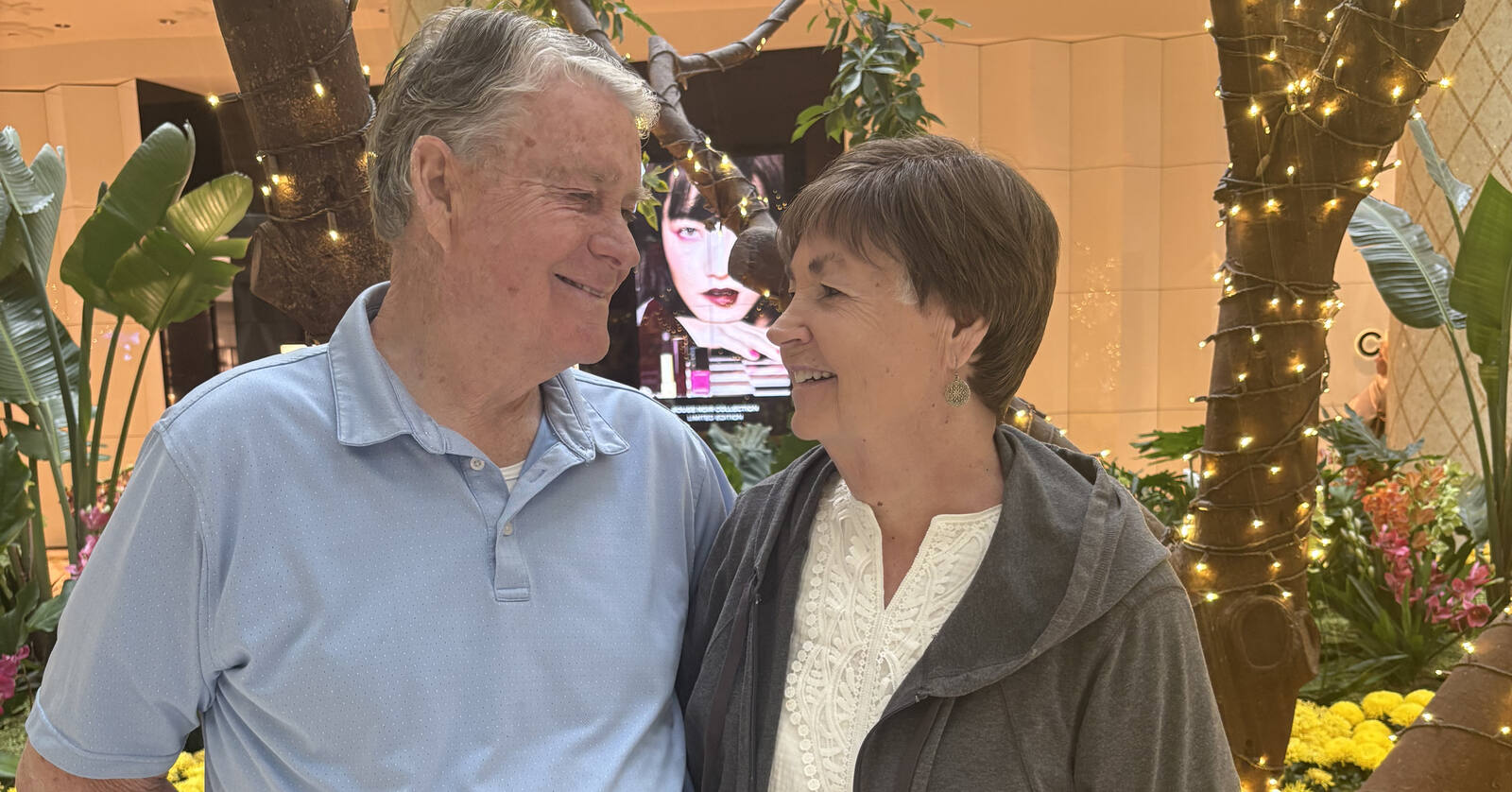
My parents have been married more than fifty years. Both of them are living with memory loss.
What I notice when I visit is not what either of them has forgotten. It is that they still turn toward each other first, and that what holds them there is a shared past neither one can fully recite anymore.
The dementia research has almost nothing to say about that. It was never built to.
What the trials measured
Reminiscence has been studied for decades, mostly as though it were a drug.
The Cochrane systematic review, twenty-two studies and nearly two thousand participants, concluded that effects are small and can be inconsistent, varying by how the sessions are run and where. Individual sessions were associated with improved cognition and mood. Group sessions were associated with improved communication. Quality of life looked most promising in care home settings.
That is a real result and it is worth knowing. It is also a result about cognition scores, depression inventories and agitation scales, because those are the instruments a randomized trial can use.
I run reminiscence sessions in memory care communities, and I was in the room for this one. A woman sat through forty-five minutes of a group session without saying anything. Not asleep, not agitated, just quiet, the way people often are in rooms full of other people's conversations. Then somebody asked the room about an early memory and her hand went up. Afterward the staff told me they had not heard her engage that way outside of family visits.
Her memory was no better at the end of that afternoon. On every instrument listed above, the session would have registered as no effect.
None of those instruments measure whether a wife felt married that afternoon.
What happened when researchers measured the relationship instead
There is a separate body of work that stopped treating the person with dementia as the only patient in the room, and it reaches a very different conclusion.
The Couples Life Story Approach is a five-week intervention. A practitioner helps a couple narrate the story of their life together. They gather photographs, cards, mementos. At the end they have a book.
The documented outcomes are not cognition scores. They are emotional benefits of reminiscing, positive evaluation of life as a couple, gratitude toward one's spouse, changes in how the couple communicates, and changes in the quality of the relationship itself.
The social workers running it noticed something the scales would never have captured. As couples reminisced and looked through the book, they moved closer together. They held hands. They put their arms around each other.
A scoping review of interventions supporting couples after a dementia diagnosis picked out life story books specifically as the reminiscence approach that has consistently shown positive outcomes for the relationship. And the qualitative work on spousal caregivers finds the same thing from the other direction: caregivers describe reminiscing about shared history as how they stay connected to their partner and hold on to a sense of themselves as a couple.
Why this matters more than the effect sizes
Here is the argument. Disagree with it if you like.
Dementia does not only take memory from the person who has it. It takes the relationship from everyone else, and reminiscence is one of the few things that gives any of it back.
A spouse becomes a caregiver by degrees. The medication schedule, the safety checks, the appointments. What goes missing is not affection, it is the footing the marriage stood on, the sense of being two people with a shared past rather than one person managing another.
An afternoon spent on the story of how they met does not treat dementia. It does something the trials could not see: for the length of that conversation, both people are back to being who they were to each other.
Three things follow.
Ask for one thing, not the whole life. Long open questions ask someone to organize decades on demand, which is the exact task dementia takes away first. A single specific question, what did your kitchen smell like, who taught you to drive, asks for one image, and one image is often still there when the timeline is not.
Bring an object. The couples work is built around photographs, cards and mementos rather than conversation alone, and that is not decoration. A physical thing gives a hand something to do and gives a memory somewhere to start.
Record it rather than remember it. Families who write things down afterward end up with their own summary of what was said. Families who record end up with the voice, the pauses, the laugh in the middle of the sentence. In twenty years those are not the same object.
The honest caveat
Reminiscence can also surface grief. The same research that documents couples moving closer together notes that for some, revisiting a shared past brings the loss into the room rather than the memory.
That is not a reason to avoid it. It is a reason to stop when it stops being good, to ask rather than push, and to treat fifteen good minutes as a complete success. There is no prize for finishing a list of questions.
The other limit is who was studied. The relationship research is almost entirely on couples where one partner has dementia and the other does not, and the strongest claims here come from it. Whether the same thing happens between a parent and an adult child, or between two people who are both losing memory, has not been measured the same way. The mechanism is plausible, and it matches what I have seen in the room, but that is observation rather than evidence and it should be read as such.
What you are left with
The immediate payoff is the afternoon, and it does not need a study to justify it. Someone talks about a kitchen in 1961 for eleven minutes, and for eleven minutes the disease is not the most interesting thing in the room.
The longer payoff is the part no trial was designed to look for. Roughly 7.4 million Americans aged 65 and over are living with Alzheimer's dementia, supported largely by more than 12 million unpaid family members who provided 19.6 billion hours of care in 2025. Almost none of those conversations are being recorded. When the person is gone, what the family keeps is whatever somebody happened to write down.
The trials asked whether reminiscence improves memory, and answered: a little, inconsistently. The better question was what it does to the people still in the room, and the answer there is considerably less modest.
My parents still turn toward each other first. Neither of them can fully recite why anymore, and it does not seem to matter. Someone should be writing down what they say while they are still saying it.
Questions people ask
Does reminiscence therapy help someone with dementia?
The clinical trial evidence shows small and somewhat inconsistent improvements in quality of life, cognition and communication. It is not a treatment for dementia and does not slow it. The stronger evidence is for what it does to the relationship between the person and their family.
Does it help the caregiver?
Research on couples reminiscing together documents gratitude toward one's spouse, a more positive view of the shared life, and improved relationship quality. Qualitative work with spousal caregivers finds reminiscing about shared history is how many of them stay connected to their partner and keep a sense of themselves as a couple rather than only a caregiver.
Can it make things worse?
It can surface grief. For some couples, revisiting a shared past brings the loss forward rather than the memory. Ask rather than push, and stop when it stops being good.
What if my parent cannot remember anything to reminisce about?
Ask smaller, and bring something to hold. A single sensory question, a smell, a sound, a room, asks for one image rather than a timeline. If nothing comes, sitting together is still the point.
Should I record these conversations?
If you can, yes, and badly is fine. A phone recording of someone's actual voice is worth more in twenty years than a tidy paragraph written from memory afterward.
If you want somewhere to start, we put together a free guide of 50 questions to ask your aging parent, grouped into seven themes, with some honest advice about asking them without the afternoon turning into an interview.
Ask one. Bring something to hold. Stop while it is still good.
Sources: Reminiscence therapy for dementia (Woods et al., Cochrane); The couples life story approach: a dyadic intervention for dementia; Constructing Couples' Stories: Narrative Practice Insights from a Dyadic Dementia Intervention; Supporting the couple relationship following dementia diagnosis: a scoping review; Understanding the impact of dementia on spousal relationships; 2026 Alzheimer's Disease Facts and Figures, Alzheimer's Association.