
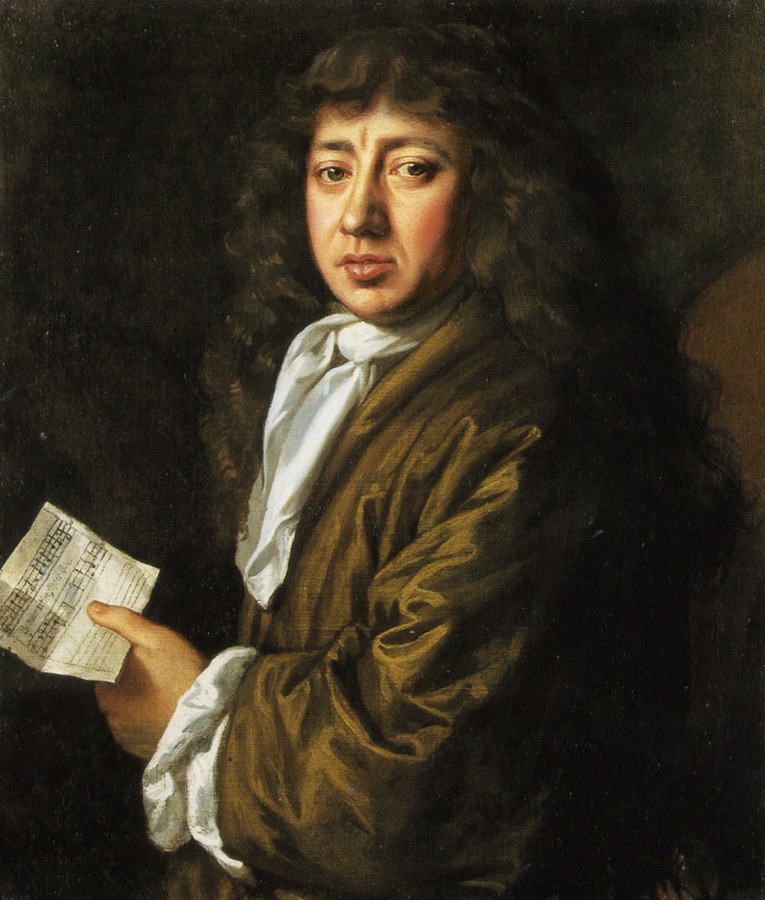
For nine years Samuel Pepys wrote down almost everything that happened to him, and he wrote all of it in a shorthand his wife could not read, switching into foreign words for the parts he most wanted hidden. Then in 1669 he stopped, and the notebooks went onto a shelf in Cambridge where they sat, unopened and unreadable, for the better part of two centuries. It was 1825 before anyone published a transcription.
What it revealed was not the official record of an age. It was a man complaining about his marriage, noting what he paid for fish, admitting to things he would never have said aloud in a room with other people in it, and, almost incidentally, leaving one of the two best-known eyewitness accounts of London burning down. The value was never in the events. It was in the fact that he was not performing for anyone.
Everybody quotes the famous diaries. Almost nobody asks why they exist
Pepys, Leonardo, Potter, Twain: the great diarists get held up constantly as proof that writing things down matters, which is true in the way that "eat better" is true. It tells you nothing about what to actually do. It certainly doesn't explain why so many families sit down with a video camera and a genuine desire to capture their father before it's too late, and come away with two hours of something strangely lifeless.
The famous diaries can explain that, but only if you stop reading them for their contents and start looking at the conditions they were written under. Because those conditions turn out to be almost identical, and almost nobody mentions them.
Not one of them was writing for us
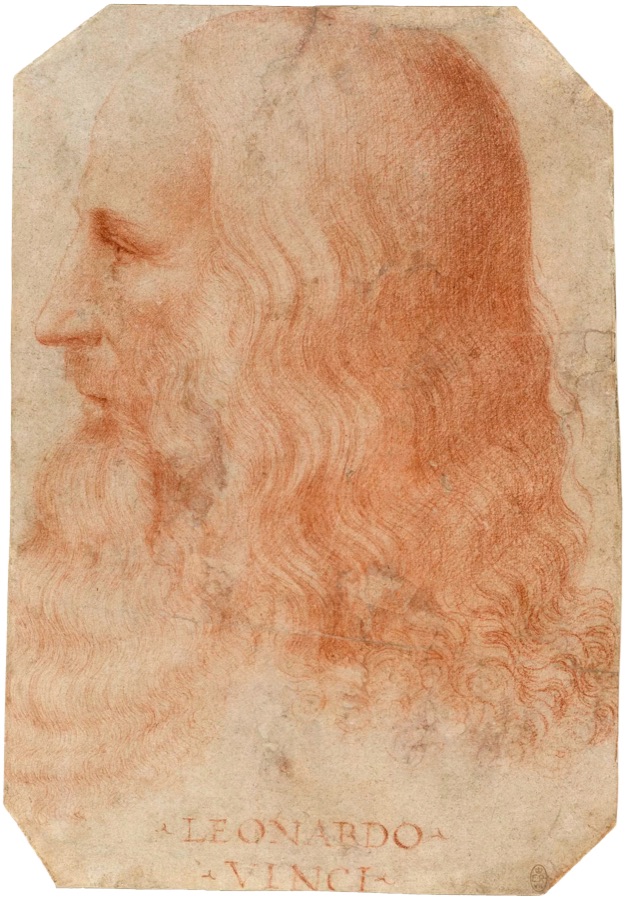
Leonardo filled something like thirteen thousand pages, and he wrote them backwards. Right to left, in mirror script, legible only if you held the page up to a glass, which is a strange amount of effort for a man who was already the most celebrated artist in Italy and had nothing much to hide. Flying machines four centuries ahead of their time sit on those pages next to grocery lists and reminders about money owed, because he was not curating anything. He was thinking on paper, privately, the way you might talk to yourself in an empty house.
Beatrix Potter did the same thing more deliberately. From the age of fifteen she kept a journal in a cipher she invented herself, and she kept it up for years, and she never told anyone what it said. It took until 1958, fifteen years after her death, for a collector to crack it, and what he found was a young woman being funny and sharp and unsparing about the adults around her in a way that the public Beatrix Potter, the one who painted rabbits in waistcoats, never was.
Mark Twain solved the same problem from the opposite end. Rather than encrypt his autobiography he simply put it in a drawer and instructed that it not be published for a hundred years, which bought him the freedom to tell the truth about people who would all be safely dead by the time anyone read it. He was right about the freedom. The first volume finally appeared in 2010, and it is considerably ruder than anything he published while alive.
A shorthand, a mirror, an invented alphabet, a century of silence. Four people across four hundred years, each going to real trouble to put a wall between what they were writing and anyone who might read it, and it is exactly that wall that makes the writing worth reading now. Candor is not a personality trait. It is a condition, and the condition is believing that nobody is watching. Had Pepys imagined us reading over his shoulder he would have tidied himself up, the way anyone would, and we would have inherited a much more respectable and much less useful book.
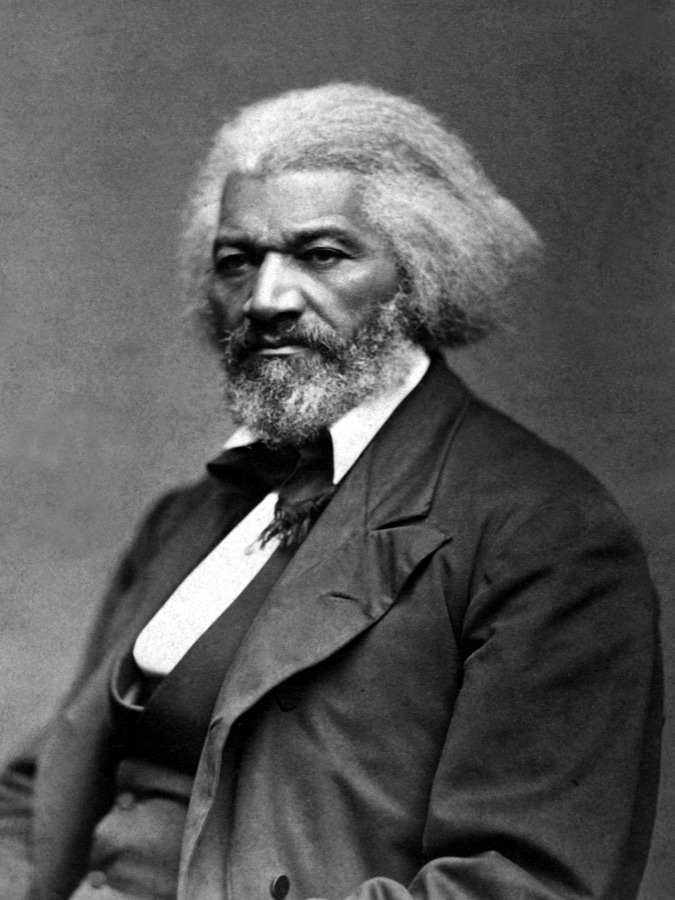
Frederick Douglass is the exception, and he is worth sitting with, because he arrives at the same place having done the reverse. He wrote three autobiographies and he wrote every one of them for publication, on purpose, because he had spent the first part of his life as a subject of other people's accounts and he knew precisely what that was worth. A man who has been described by others, and described wrongly, does not need convincing that the record matters or that whoever holds the pen decides what survives. So he took the pen.
Which leaves two ways for a life to come down to us intact. Either it is written in private, honestly, by someone who assumed nobody would ever see it, or it is written deliberately by someone who understood that the alternative was being remembered badly. What almost never survives is the third version, the one produced for an audience sitting in the room, and that is precisely what most families end up recording.
Which is why the camera makes everything worse
Set up a tripod, sit your mother in a good chair, and tell her that her grandchildren will watch this one day. You can actually see the change happen. She sits up. Her voice shifts into the register people use at weddings. And then out come the stories she has been telling at Christmas for thirty years, sanded down by repetition into something smooth and pleasant and almost entirely without information.
None of that is her fault. You told her it was for posterity, so she gave you posterity. What you wanted was the woman who exists in the ten minutes after everyone else has gone to bed, and that woman does not come out for a tripod.
The whole problem is how to manufacture that condition in a kitchen in 2026. Three things do most of the work.
Ask one question and then say nothing at all
Not a list, and not a follow-up. One question, and then a silence you have to physically resist filling.
People cannot leave a pause alone, and what they use to fill it is almost never an answer to what you asked. Ask what someone's first job was and you will get a job title in four seconds flat. Say nothing for the next forty and you will usually get the foreman who hired him, and how old he seemed, and what happened to him afterward, and something about that period that your father has never once volunteered because nobody ever left him enough room to.
Record it badly rather than not at all
A phone face down on the table between the coffee cups is enough. It is more than enough.
Everyone imagines they will do this properly later, with better equipment and a quieter room, and later keeps not arriving. Meanwhile the actual thing you want, which is the sound of him laughing at his own story before he gets to the end of it, is available right now for free. No family in history has sat down thirty years on and wished the audio had been cleaner. A great many have wished there were any audio at all.
Make it feel like it does not count
Do not announce that this is being preserved. Do not say the words family archive. Do not move to the dining room, because the dining room means occasion, and occasion means performance.
You want an ordinary Tuesday afternoon, a conversation that happens to have a phone lying on the table, nothing riding on it and no reason to be careful. That is the modern version of writing in code: not secrecy exactly, but the sense that this is just for now, just between us, and nobody is going to be reading it later. That belief is the whole mechanism. It is what produced Pepys, and it is what will produce the one sentence from your father that you will still be turning over in your head in twenty years.
What you are actually left with
You get the unrehearsed version, which is the only one worth having. The pause before the answer. The thing that arrives after "I don't think I've ever told anyone this." None of that exists in any photograph or any document, and it does not exist anywhere at all until somebody sits down and asks for it.
And then it keeps existing, long after you have stopped being able to ask. Pepys wrote for himself in a room in 1665, in a shorthand nobody close to him could read, and a stranger read him three hundred and fifty years later and found him completely alive on the page. Your father's voice, captured badly on a phone on an unremarkable afternoon, will still play when your grandchildren are the age you are now.
The only question that has ever mattered here is whether anybody thought to record it while there was still someone in the room to ask.
Questions people ask
How long did it take to decode Pepys's diary?
Pepys wrote in Thomas Shelton's shorthand, a system that was published and not especially secret, though he modified it and used foreign words for the passages he most wanted hidden. John Smith spent roughly three years transcribing it in the 1820s, apparently unaware that a key to the shorthand was sitting in the same library. The first edition appeared in 1825, more than 150 years after Pepys had stopped writing.
Why did Beatrix Potter write in code?
She was fifteen when she started and she never explained it. What the decoded journal shows is a young woman recording sharp, funny, often unkind observations about the adults around her, in a household where privacy was scarce. The cipher gave her somewhere to be honest. Leslie Linder spent years breaking it and published his transcription in 1966.
What should I record first with an elderly parent?
Something small and specific rather than something sweeping. "Tell me about your childhood" invites a summary, and summaries are exactly what you do not want. Ask about one object, one photograph, one ordinary afternoon, and let it open outward from there.
Do I need special equipment to record my parent's stories?
No. A phone lying face down on the table records perfectly usable audio, and the difference between good audio and no audio is enormous while the difference between good audio and excellent audio is almost nothing. Waiting for better equipment is the most common way these recordings never get made.
Is it too late if my parent has dementia?
Often not, though what you are capturing changes. In Alzheimer's, memories from decades ago are frequently better preserved than recent ones, which is why a conversation about 1958 can go somewhere a conversation about last Tuesday cannot. The research is not unanimous on this and the pattern varies between people, so treat it as a reason to try rather than a rule. Familiar objects, music and photographs tend to open doors that direct questions close.
The hard part was never the recording. It is knowing what to open with, which is why we put together a free guide of 50 questions to ask your aging parent, grouped into seven themes, with some honest advice about asking them without the whole thing turning into an interview. The last section holds the questions families most often wish they had asked.
Start with one, and then let the answer go wherever it wants to go.
On memory in dementia: Autobiographical memory in Alzheimer's disease: a systematic review, which covers 83 studies and reports both the relative preservation of remote memories and the studies that do not find it.
Portrait credits. Pepys is the John Hayls portrait of 1666, and the Leonardo is the red chalk portrait of about 1515. Both are reproductions of works several centuries old, and under US law a faithful photographic reproduction of a flat public domain work carries no new copyright of its own. The Douglass photograph is from about 1879 and is held by the Library of Congress; US works published before 1930 are in the public domain.